
Soft Sourdough French Bread Without Yeast!
This loaf of soft sourdough French bread contains no yeast, and has that delicious tang from sourdough!
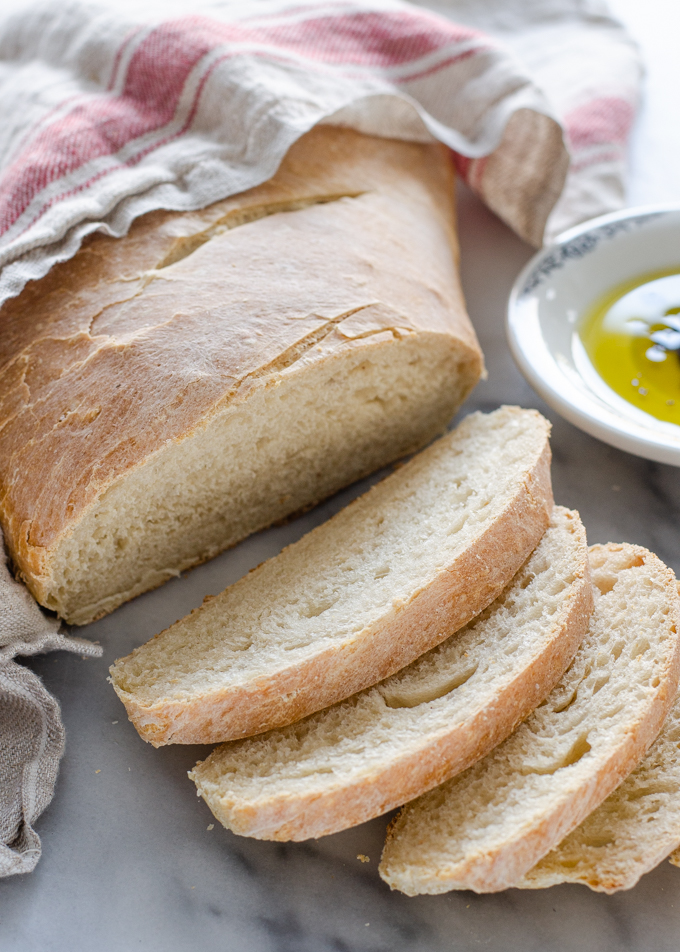
This loaf came about because of a lack of good sourdough French bread recipes on the internet.
My birthday was coming up, and I decided that what I wanted most was to have a bruschetta potluck. I would provide the bread and we all would bring toppings!
Of course I wanted to make sourdough for the bread. But a search of the internet brought up no reliable soft sourdough French bread recipes that had no yeast. So I decided to write my own recipe! It turned out beautifully the first time.
And that's how this sourdough French bread was born! Let's get to making it...
How to Make Soft Sourdough French Bread
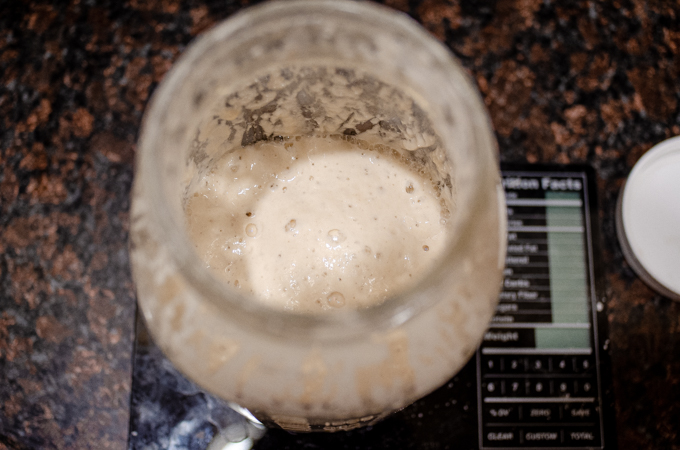
Of course you need to start with an active sourdough starter. An active starter is one that's been fed 8-12 hours previously, has doubled in bulk, and is bubbly and sour.
Make sure to check out my How to Make Sourdough Starter tutorial over on The Pioneer Woman's blog if you're new to sourdough.
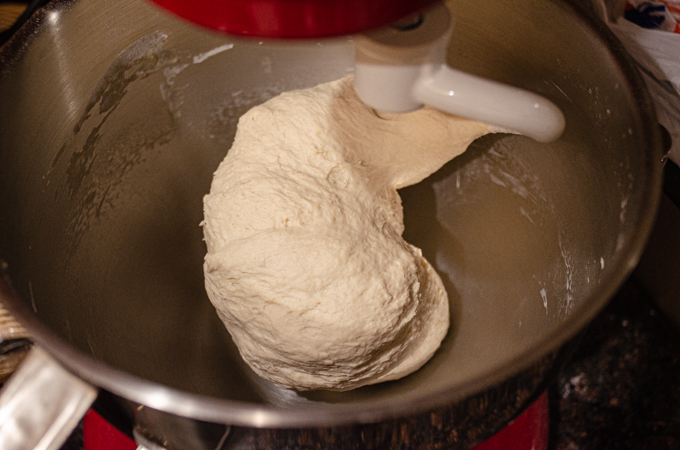
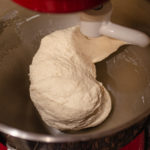
Place all of the dough ingredients in the bowl of a stand mixer fitted with a dough hook. The key to soft sourdough French bread is to get the hydration of the dough right. You want it to be really soft, and almost tacky. Definitely lean more towards a wet dough than a dry one! Knead for 15 minutes on medium-low speed (I set my mixer to 2/10).
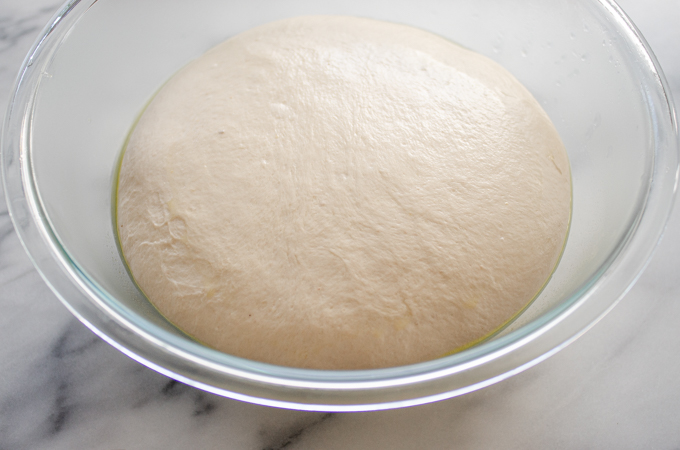
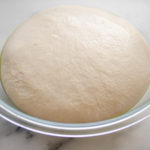
Place in a well oiled bowl and allow to rise at room temperature until doubled, about 8-12 hours.
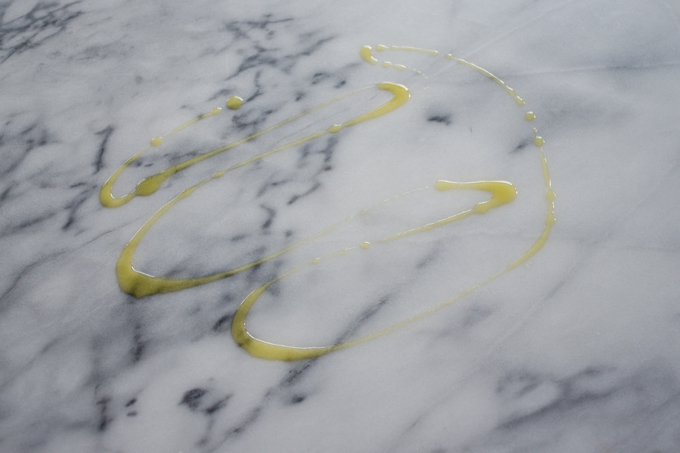
Grease your work surface.
How to Form Soft Sourdough French Bread
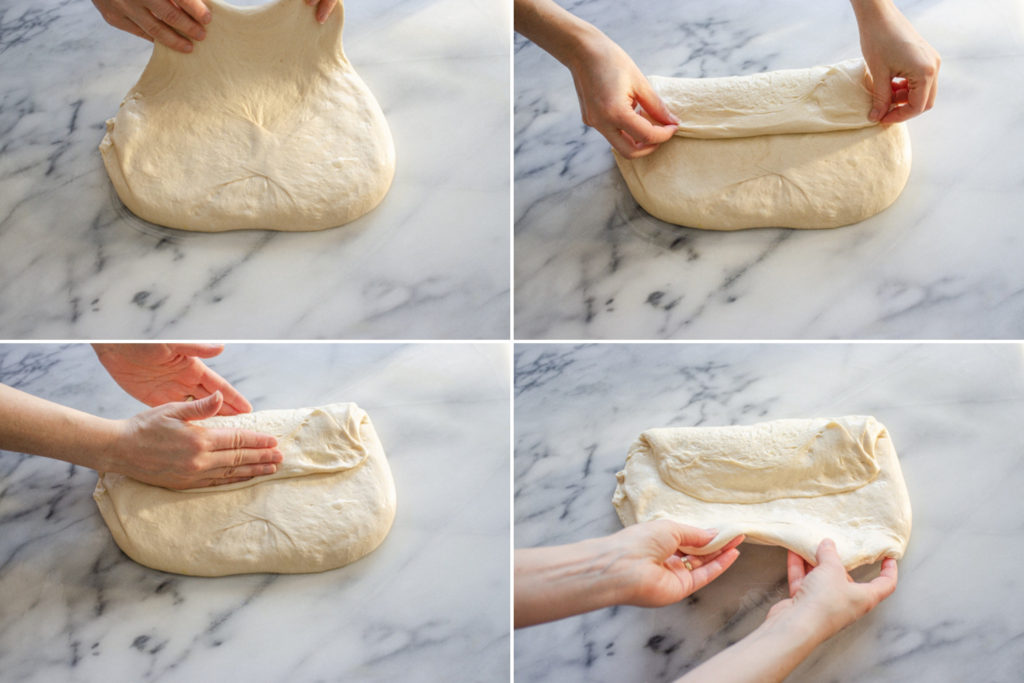
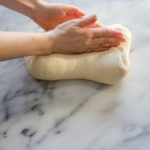
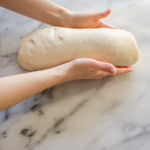
Plop the dough out onto the work surface. Working with greased hands, form the dough:
1) Grab the top edge of the dough, stretch it upwards...
2)...and fold it over to the middle of the dough.
3) Using the side of your hand, press the edge of the fold in place.
4) Grab the close edge of the dough...
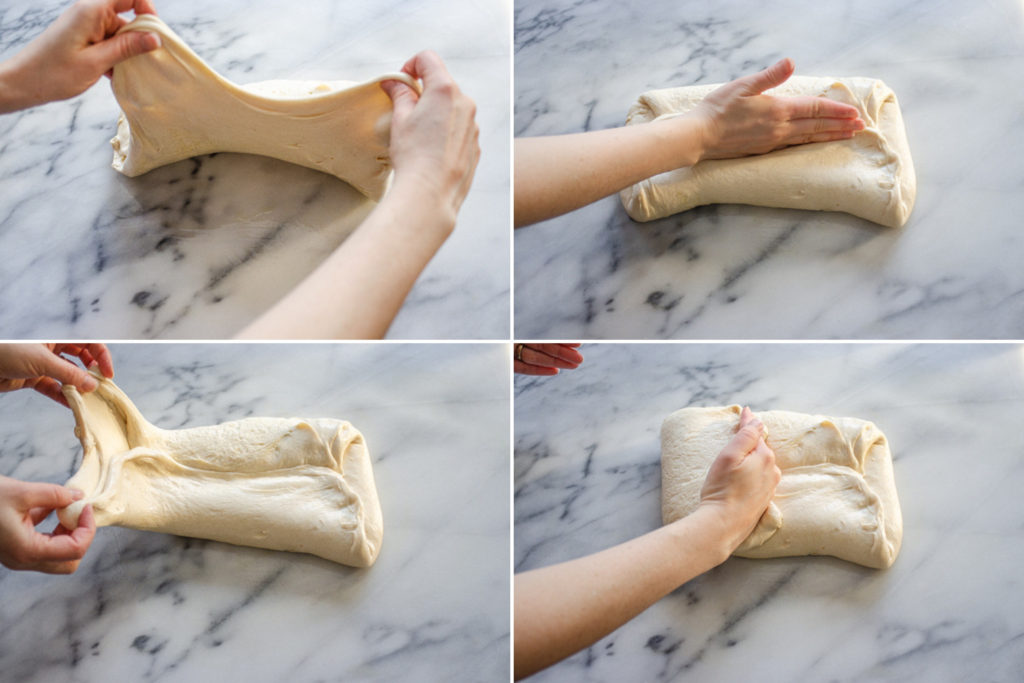
5)...stretch it out...
6)...and fold it over the middle of the dough. Using the side of your hand, press the edge of the fold in place.
7 and 8: Repeat with the left edge of the dough.
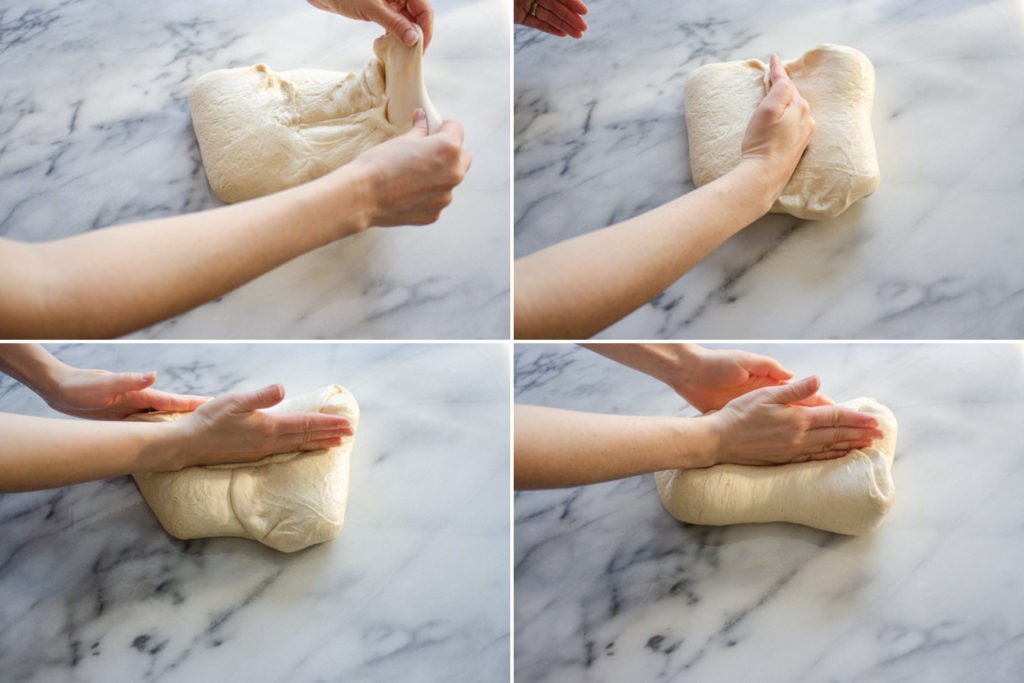
9 and 10: Repeat with the right edge of the dough.
11 and 12: Repeat once more with the top and bottom edges.
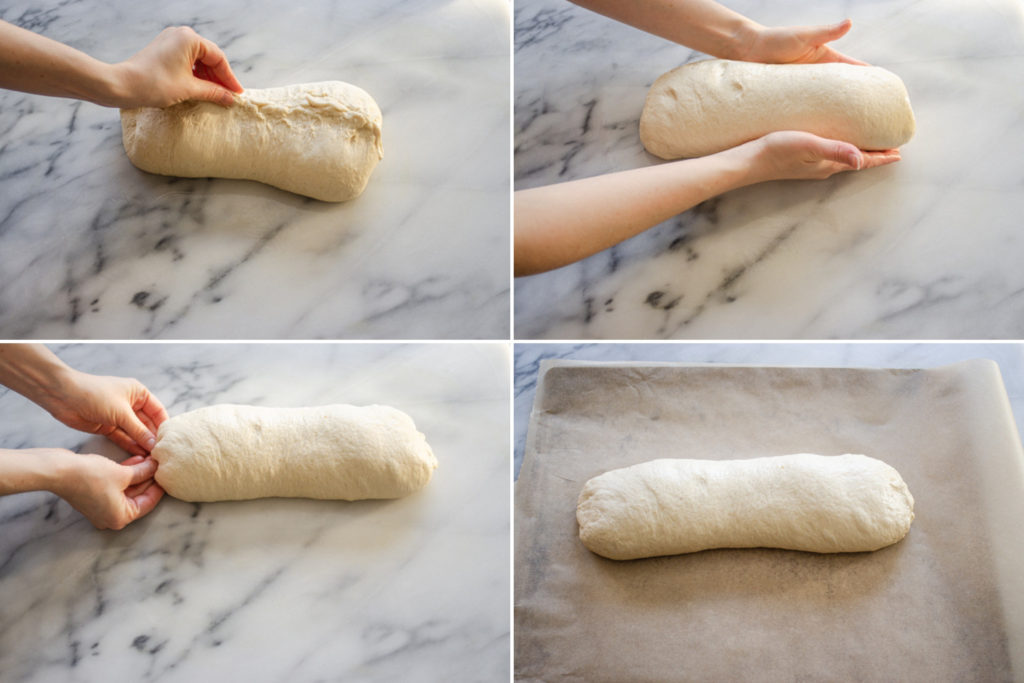
13) Pinch the seam to seal it.
14) Flip the loaf over and use your hands to stretch the dough under itself to build more surface tension.
15) Pinch the ends of the dough to seal.
16) Place on a parchment lined baking sheet.
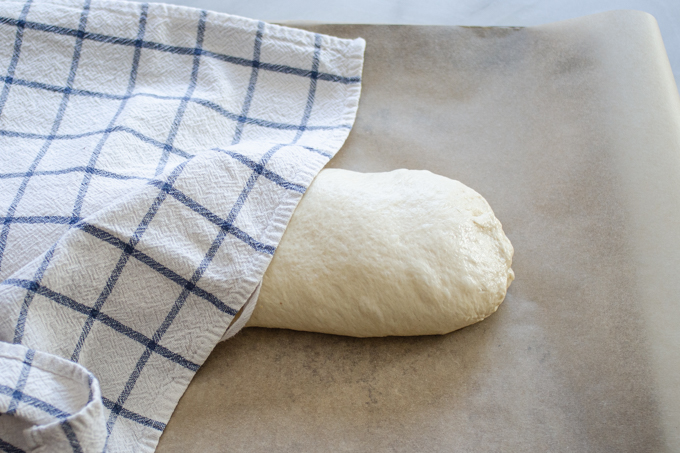
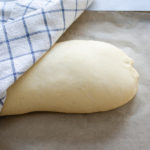
Cover with a tea towel and leave in a warm spot to double. This can take anywhere from 4 to 8 hours, depending on how warm your kitchen is.
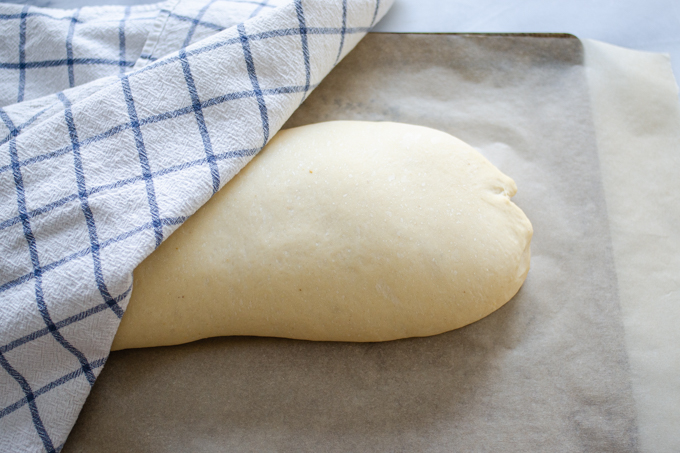
Here's what the loaf should look like once it's nicely risen.
Scoring and Baking
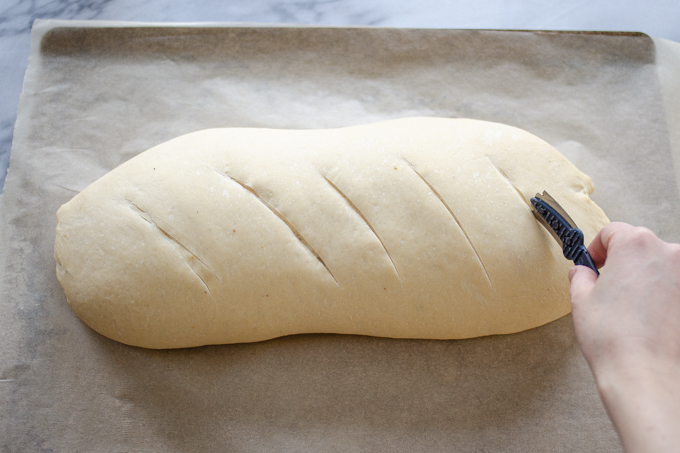
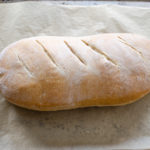
Score the dough with a razor blade, lame, or serrated knife.
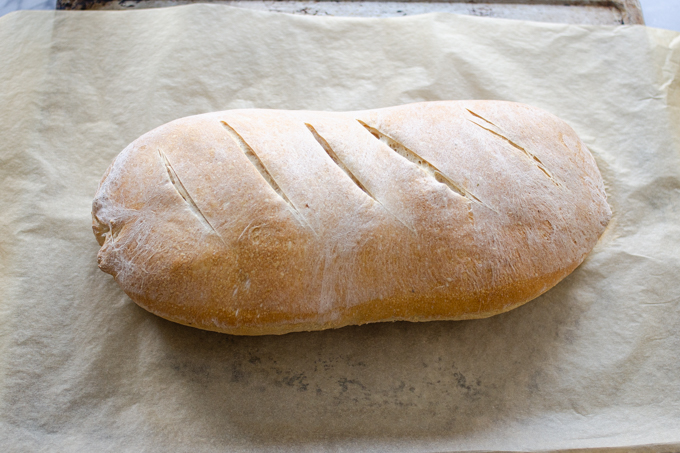
Bake in a 450° oven until golden.
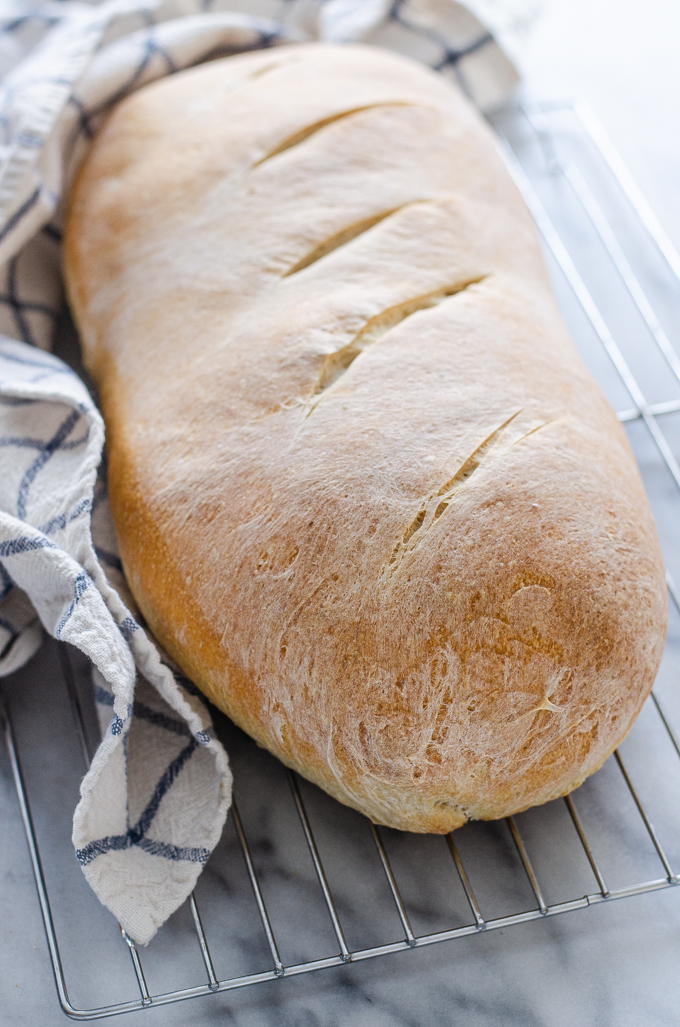
Allow your beautiful loaf of soft sourdough French bread to cool completely (or as completely as you can) on a wire cooling rack.
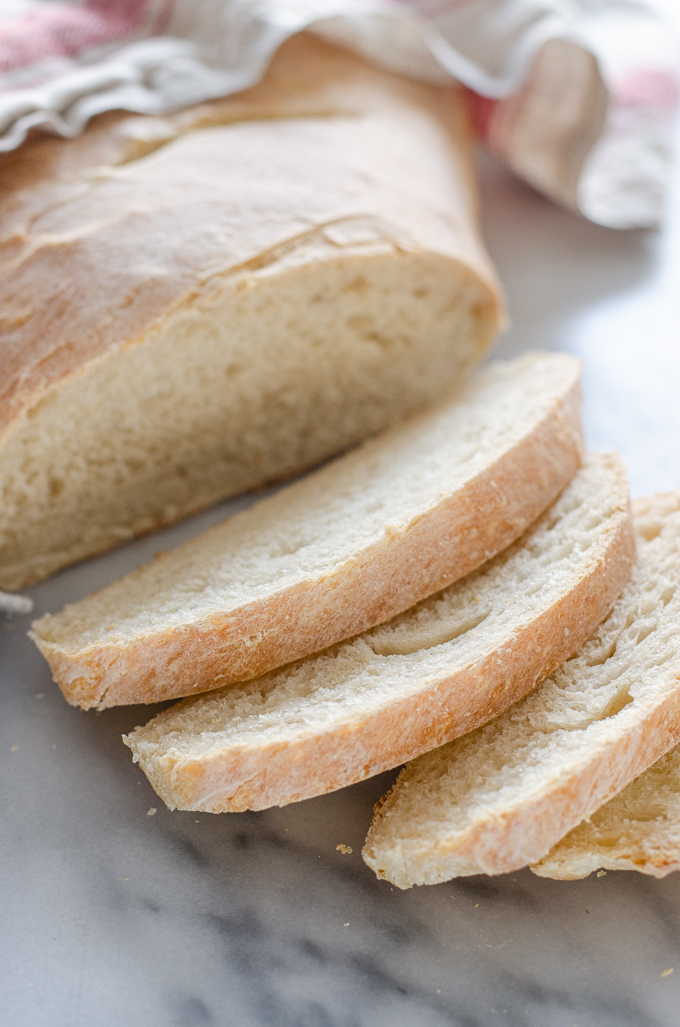
THEN it's safe to slice it up! I like to slice it on the bias...somehow it makes me feel fancy...?
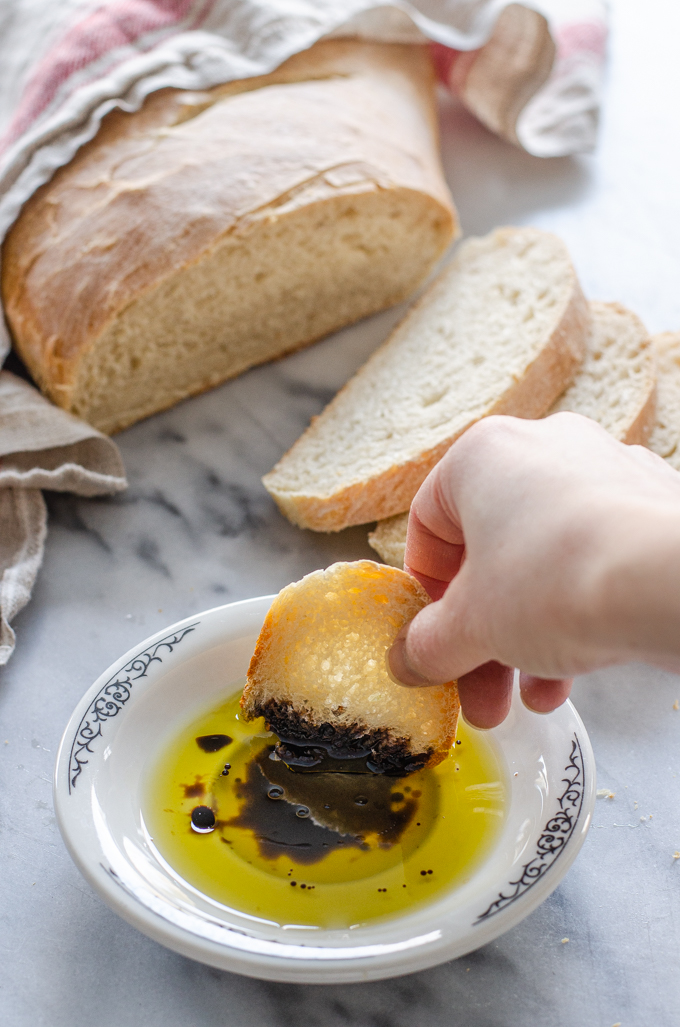

Now, besides using this soft sourdough French bread for a bruschetta potluck, it's also delicious dipped in olive oil and balsamic vinegar.
What's YOUR favorite way to eat French bread?
More Sourdough Recipes:
- Sourdough Pull Apart Rolls
- Sourdough Sandwich Bread
- How to Make Artisan Sourdough Bread
- Overnight Sourdough Waffles
- Sourdough Dutch Baby/German Pancake
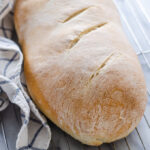
Soft Sourdough French Bread
This loaf of sourdough French bread has no yeast and is delightfully tangy.
Ingredients
- 1 cup water, 215 grams
- 1 cup active sourdough starter, 240 grams
- 3 ½ cups organic all-purpose flour, 470 grams
- 1 tablespoon raw honey
- 2 teaspoon unrefined sea salt, 11 grams
- 2 tablespoon olive oil, 18 grams
- extra olive oil, for work surface
Instructions
Mixing the Dough + First Rise
-
Place all of the dough ingredients in the bowl of a stand mixer. Briefly mix with a spatula or wooden spoon to form a shaggy dough. Attach to the base of the stand mixer and fit with the dough hook. Knead on medium-low speed for 15 minutes. The dough should be quite soft, but clean the sides of the bowl. You can add more flour if the dough seems very wet, but err on the side of wet rather than dry!
-
Transfer the dough to a well greased, large bowl, turning once to grease the top of the dough. Cover and allow to rise at room temperature until doubled, about 8-12 hours.
Forming the Loaf
-
Grease your work surface. Plop the dough out onto it and gently pat it out to a rectangle. Grab the far edge of the dough and stretch it up and over to the middle of the dough. Use the side of your hand to press the edge of the fold in place. Repeat the stretching, folding, and pressing steps with the bottom edge, left edge, and right edge. Repeat once more with the top and bottom edges. Pinch the seam to seal well.
-
Flip the dough over and use your hands to push the edges of the dough under itself, creating even more surface tension. Pinch the ends of the loaf to seal.
Second Rise
-
Place the loaf on a parchment lined baking sheet. Cover with a tea towel and allow to rise in a warm spot until doubled. This can take anywhere from 4-8 hours, depending on how warm your kitchen is.
Baking the Loaf
-
About half an hour before the loaf is done rising, preheat your oven to 450°F. Slash the loaf with a razor blade, lame, or serrated knife. Bake in preheated oven for 25-30 minutes, or until deep golden.
-
Transfer to a wire cooling rack. Allow to cool completely before slicing + enjoying!
Recipe Notes
Heavily adapted from Butter For All.



Can I use bread flour instead of all purpose flour? And how much should I adjust the water level if using bread flour? Thanks.
Yes, you can use bread flour. I would suggest starting with a smaller amount of flour, and adding more to achieve the texture in the photos.
Its my first time trying this recipe, would you be able to advise how much less flour to start with? Am I looking at 10% or 20% less...? Thanks again?
I would say start with 2 3/4 cups of flour, and add from there!
Awesome recipe. So easy to follow, no need for stretch and folds in between and it taste so good! Can’t believe it’s all done without yeast too!
So happy you enjoyed it! Yes, it's nice to have a "simple" sourdough recipe that doesn't require the stretch and fold method. I love that process, but sometimes you just don't have the time to baby it!
Does this recipe bake in a loaf pan. Mine is a 9x5 pan. thanks.
It should work fine in a 9x5 inch loaf pan.
Hi can this be baked in a 9x5 loaf pan?
That should work!
Hello,
Can I use regular honey? I don’t have and raw honey. Also could I let the second rise be more than 6 hours? I’m thinking of baking it first thing in the morning.
Hi Melisa,
Yes, regular honey will work. As for rise time, it really depends on your kitchen. If it's super warm, the dough might be over proofed. If you find that it's fermenting too quickly, you could do a longer rise in the fridge instead, or put it in the fridge overnight, then put it on the counter to double the next morning.
Thank you. I just put it in the fridge. I'll bring it out tomorrow morning to complete the second rise after it's been shaped before baking.
ALSO, I'm using a french bread pan. Two questions.... Do I still need to use parchment paper with it? It has holes in the pan. AND, could I make two smaller loaves instead, and if so, would the baking time be different? THANK YOU!
Hi Melisa,
I'm not familiar with French bread pans, so I can't comment on whether or not you should use parchment paper. If the loaves are smaller, I would definitely check for doneness early.
This was a great reciepe for my first sourdough! I cant believe it worked on the first try. figured i would have to try several reciepes and trial and error to make a good loaf. How do you get such a light color on your crust? What would happen if I lower the temp to 400 or lower?
Hooray for awesome results first try! Yes, you could try lowering the temperature of your oven and see if that affects it.
I LOVE THIS RECIPE! I made sourdough bread from a recipe on King Arthur’s page and it was hard and not super flavorful. This bread is SOFT and my family loved it! I will definitely be baking this again. I also used a Dutch oven and didn’t cover it for baking and it came out perfect!
Aw, so happy you enjoyed it, Krista! Thanks for letting us know that it works to bake it in a Dutch oven.
Thank you for this recipe! After 2 days of failed attempts at making a sourdough french bread, I found your recipe and finally a success! Your notes were helpful especially about working on a greased surface. With my first 2 attempts I was trying to use a floured surface and kept adding flour because the dough was sooo sticky (the recipe I used mentioned nothing of this!). I think I added way too much flour and ended up with dense bricks. Using the oil did the trick! Thanks again!
I'm so happy you had success, Lauren, and that my notes were helpful!
what can I do about over proofing? Can I reform to loaf and start over with the proofing? Or should I just bake it as is?
If you're talking about the second rise, I would deflate and reshape if it's extremely over proofed. Otherwise it will collapse when you take it out of the oven.
But if it puffed up just a bit more than what's ideal I would go ahead and bake it.
After baking about 20 sourdough French loafs trying different recipes at last this is the best ever recipe without all the arm workout of kneading. Thanks especially for your detailed photos showing the folding technique
You're welcome! I'm so glad you enjoyed it!
This is just I was looking for.....
Thank you!
Hooray! Hope you enjoy! 🙂
This was my first attempt at a sour dough French loaf, and it is a winner! Since this is for Christmas eve dinner tomorrow, I wanted to ensure it would be edible (I have made a few door stops in the last year). I mixed up the dough in my Ninja (about ten pulses to mix ingredients, then five minutes on "dough" setting. I sped up the process by proofing in the oven with just the light on. Five and a half hours for the first rise, and two hours for the second rise. I liberally sprinkled the top with "Everything Bagel" seasoning. It could have used a tad less time in the oven (25 minutes made it very dark). But it turned out great despite the dark crust. Thank you for a terrific recipe.
I'm so honored that you chose my recipe for your Christmas Eve dinner! Thank you for sharing with us what you did! That's good to know that you can mix it up in a Ninja. And EBBS sounds amazing! I should give that a try.
My second loaf using this recipe is in the oven right now and it's looking even better than the first one! I baked both in a dark silicone loaf pan that I sprayed with avocado oil. The first loaf I went with closer to minimum rising times and it was delicious and sour, but a bit denser than I'd prefer (that's what I get for rushing!). The second loaf has definitely risen better. I let it rise overnight for the first round (10-11 hours) and then just over 8 hours for the second rise. I was nervous about the damp towel sticking to the dough as it rose, so I made a "tent" with two empty bottles on either side of the pan, which seemed to still keep the dough from drying out! I am definitely keeping this recipe in my sourdough rotation!
I've never baked with a silicone loaf pan - that sounds really cool! Thank you for letting us know what worked for you!
I haven't made it yet, but I'm looking forward to it. Can't wait to try it out!
Hope you enjoy! 😊✨
I just finished shaping the loaf, and I am wondering, do I have to use a tea towel, or can it be a different type of towel? (All the tea towels I have are dirty.)
It can be any type of towel or even a clean napkin, as long as it isn't too heavy. That's the advantage of a tea towel: it's thinner than a hand towel usually.
Awesome recipe and it’s a keeper! I made this into a boule instead of a loaf.
The no-yeast bit is misleading though. A sourdough starter contains wild yeast + bacteria. Only thing we didn’t use here is commercial/baker’s yeast (fresh or dry).
So happy you enjoyed it! I'm using "yeast" to mean commercial yeast. 🙂
Did anyone use steam while baking? I'm nervous it will be pale.
@Chelsea Koziatek, I did . Turned out awesome. Beautiful color. I put a pan on the bottom rack while preheating oven. Then poured about 2 cups boiling water in it , when I put the loaf in the oven. Water is gone by 10/15 minutes.