
Soft Sourdough French Bread Without Yeast!
This loaf of soft sourdough French bread contains no yeast, and has that delicious tang from sourdough!
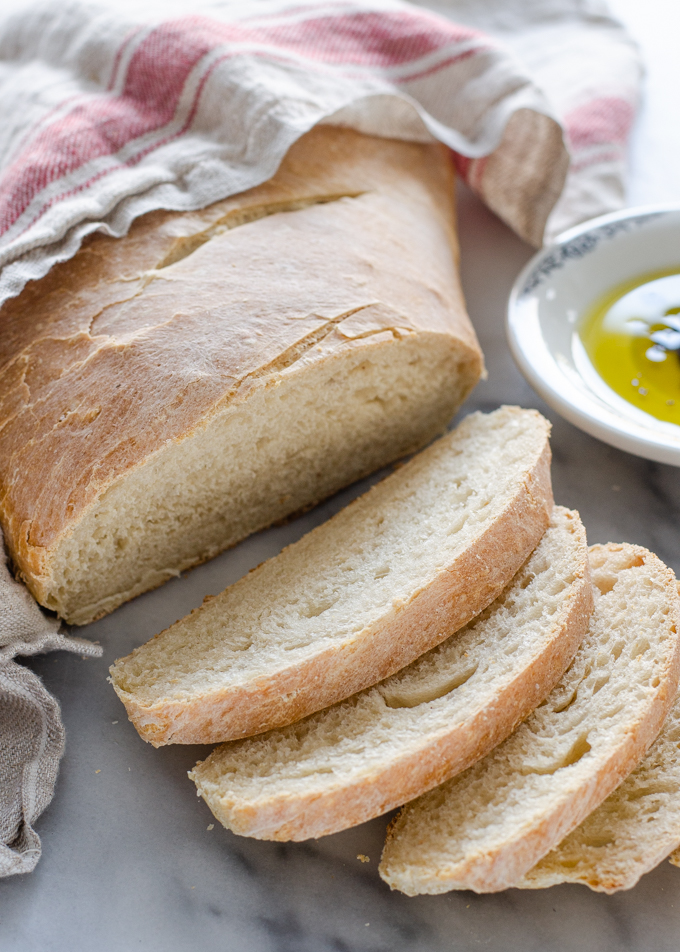
This loaf came about because of a lack of good sourdough French bread recipes on the internet.
My birthday was coming up, and I decided that what I wanted most was to have a bruschetta potluck. I would provide the bread and we all would bring toppings!
Of course I wanted to make sourdough for the bread. But a search of the internet brought up no reliable soft sourdough French bread recipes that had no yeast. So I decided to write my own recipe! It turned out beautifully the first time.
And that's how this sourdough French bread was born! Let's get to making it...
How to Make Soft Sourdough French Bread
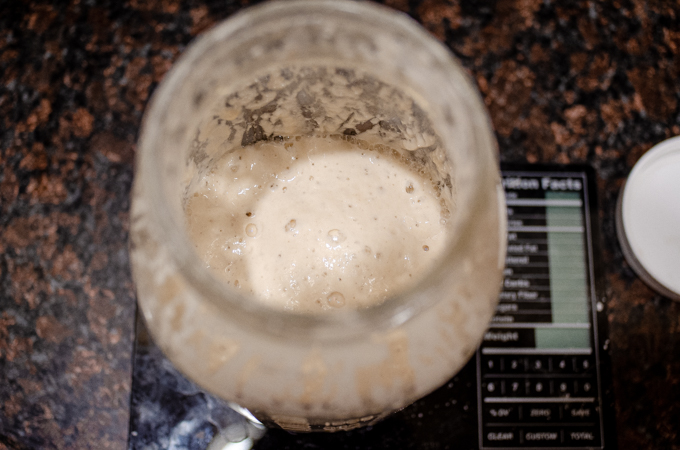
Of course you need to start with an active sourdough starter. An active starter is one that's been fed 8-12 hours previously, has doubled in bulk, and is bubbly and sour.
Make sure to check out my How to Make Sourdough Starter tutorial over on The Pioneer Woman's blog if you're new to sourdough.
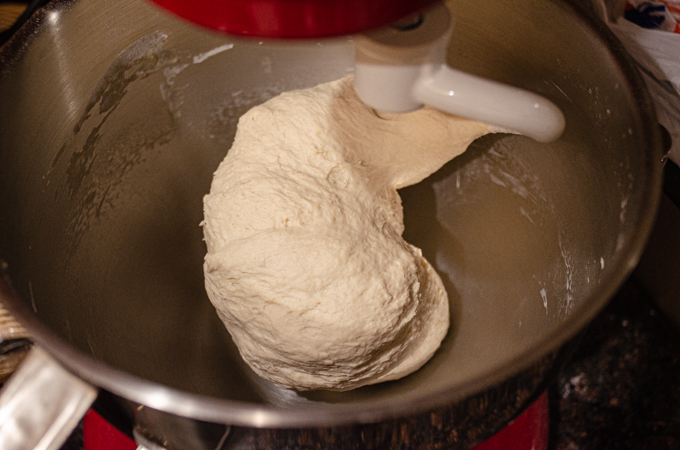
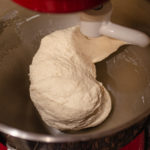
Place all of the dough ingredients in the bowl of a stand mixer fitted with a dough hook. The key to soft sourdough French bread is to get the hydration of the dough right. You want it to be really soft, and almost tacky. Definitely lean more towards a wet dough than a dry one! Knead for 15 minutes on medium-low speed (I set my mixer to 2/10).
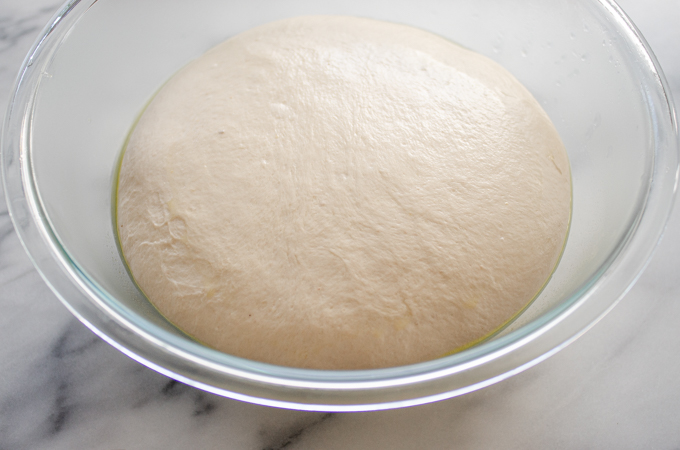
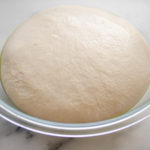
Place in a well oiled bowl and allow to rise at room temperature until doubled, about 8-12 hours.
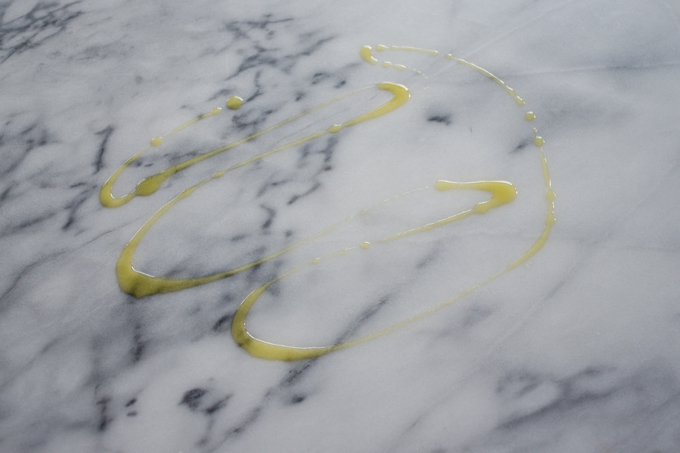
Grease your work surface.
How to Form Soft Sourdough French Bread
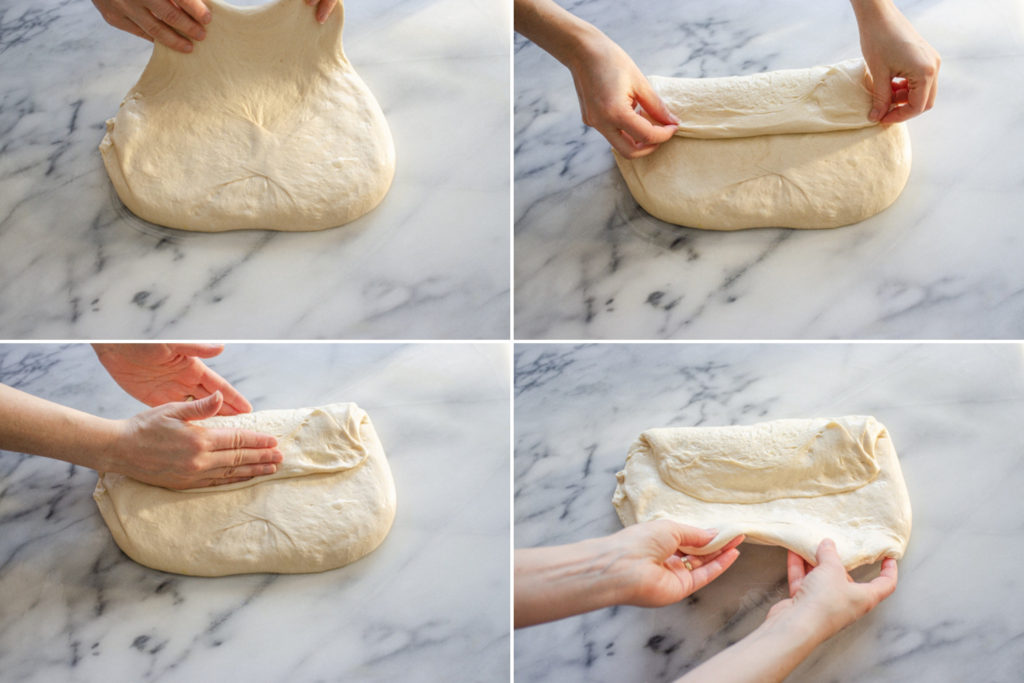
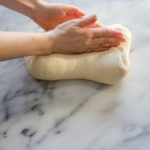
Plop the dough out onto the work surface. Working with greased hands, form the dough:
1) Grab the top edge of the dough, stretch it upwards...
2)...and fold it over to the middle of the dough.
3) Using the side of your hand, press the edge of the fold in place.
4) Grab the close edge of the dough...
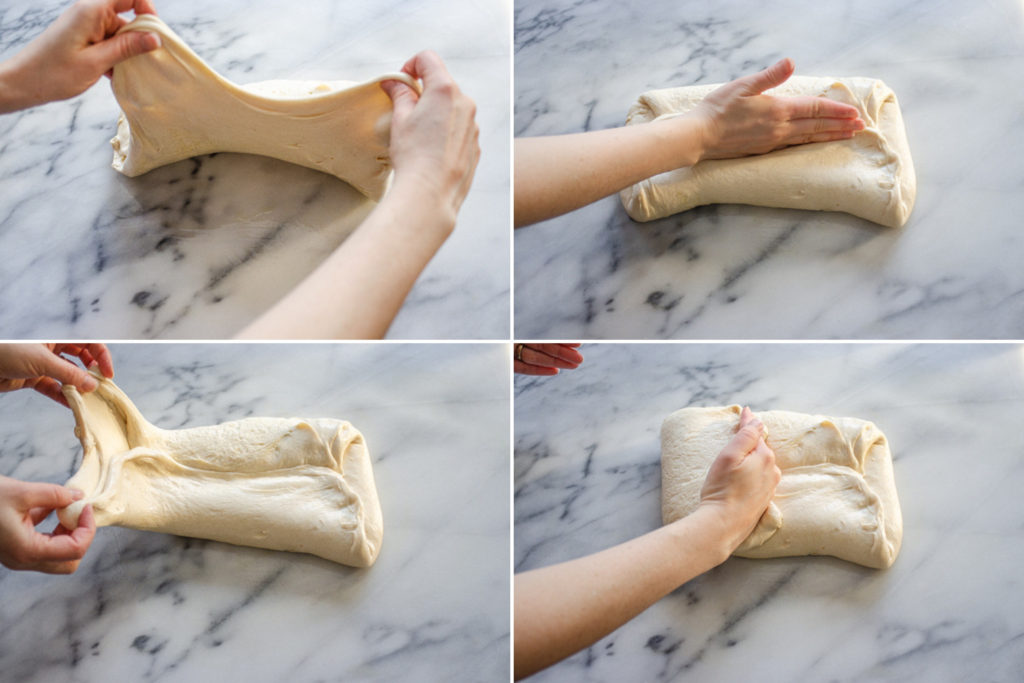
5)...stretch it out...
6)...and fold it over the middle of the dough. Using the side of your hand, press the edge of the fold in place.
7 and 8: Repeat with the left edge of the dough.
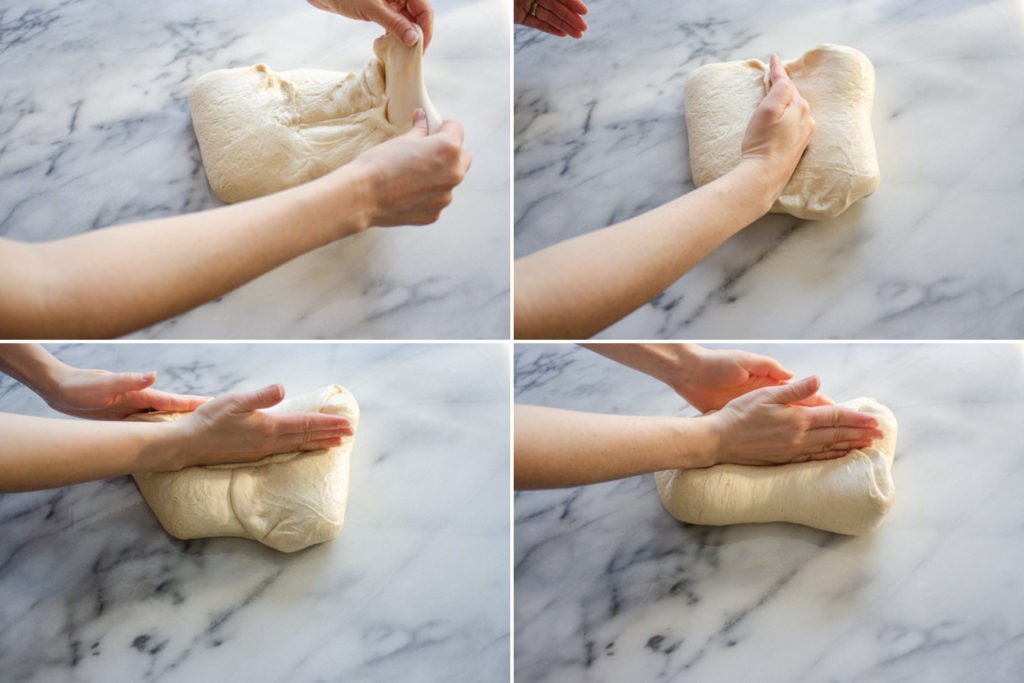
9 and 10: Repeat with the right edge of the dough.
11 and 12: Repeat once more with the top and bottom edges.
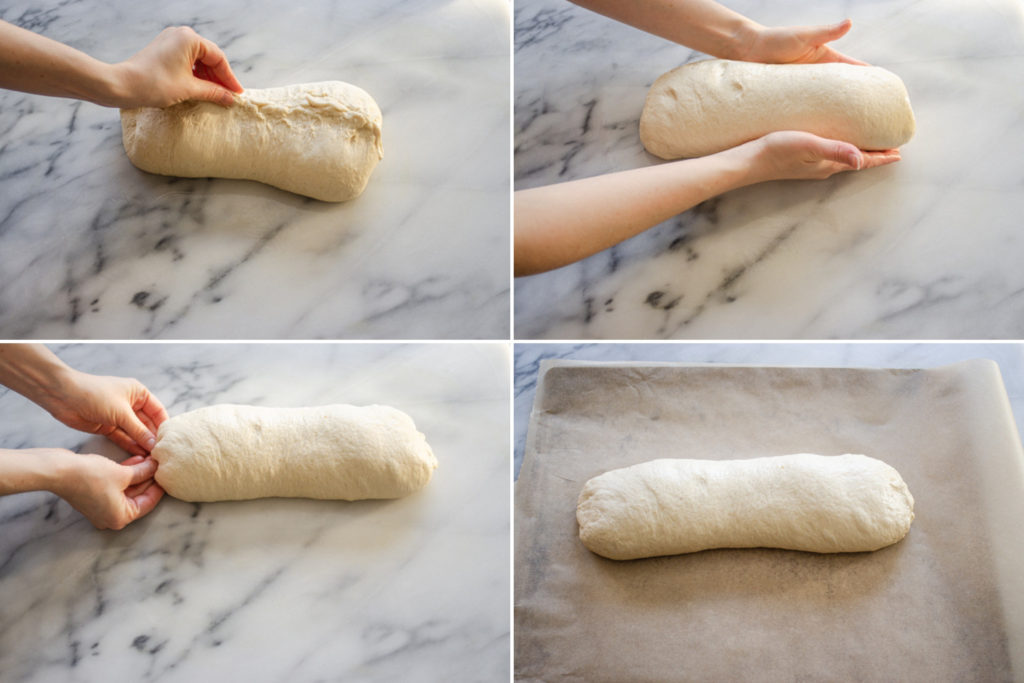
13) Pinch the seam to seal it.
14) Flip the loaf over and use your hands to stretch the dough under itself to build more surface tension.
15) Pinch the ends of the dough to seal.
16) Place on a parchment lined baking sheet.
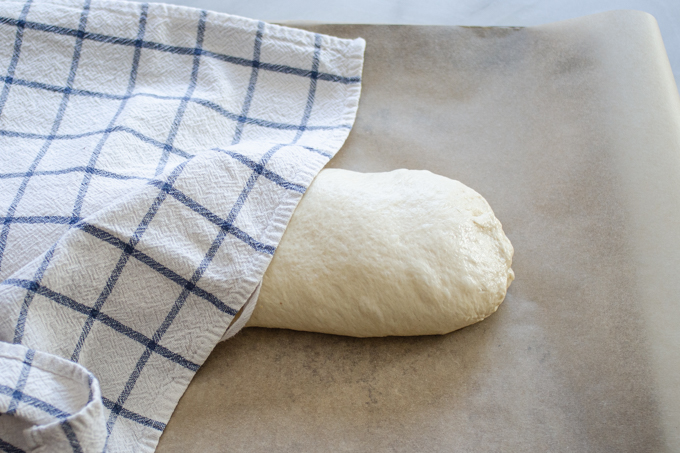
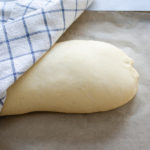
Cover with a tea towel and leave in a warm spot to double. This can take anywhere from 4 to 8 hours, depending on how warm your kitchen is.
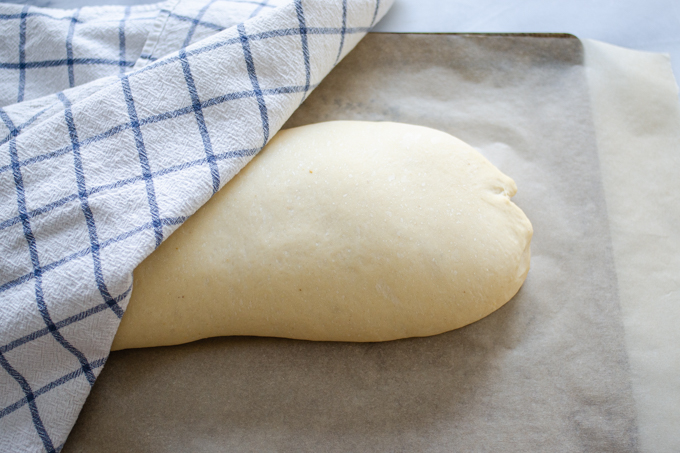
Here's what the loaf should look like once it's nicely risen.
Scoring and Baking
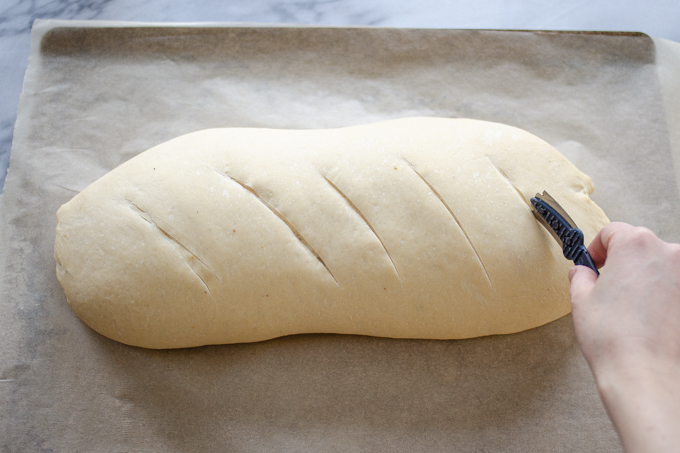
Score the dough with a razor blade, lame, or serrated knife.
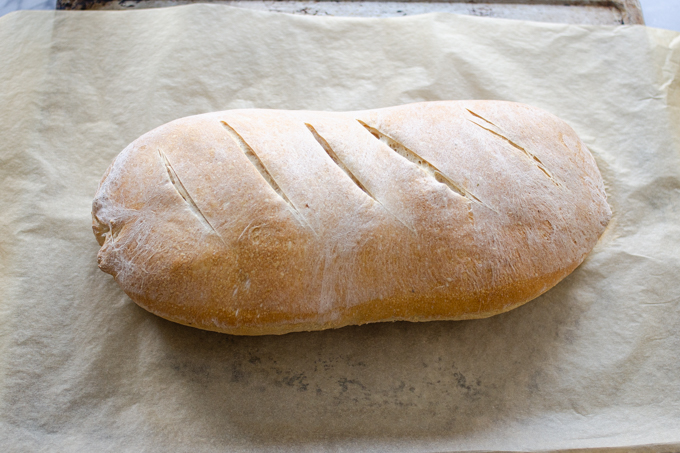
Bake in a 450° oven until golden.
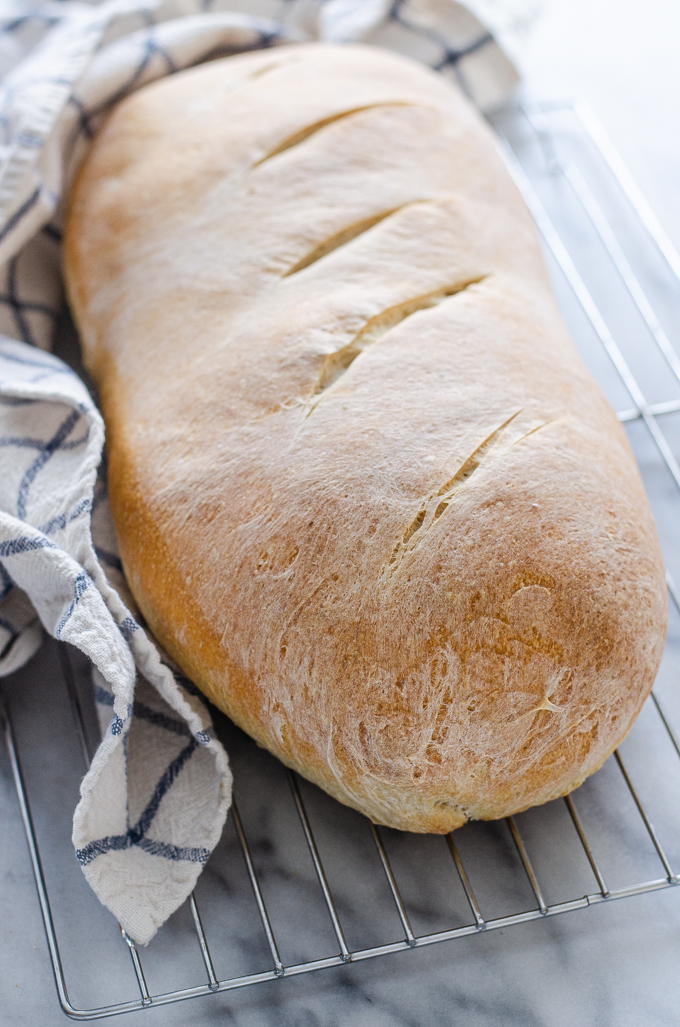
Allow your beautiful loaf of soft sourdough French bread to cool completely (or as completely as you can) on a wire cooling rack.
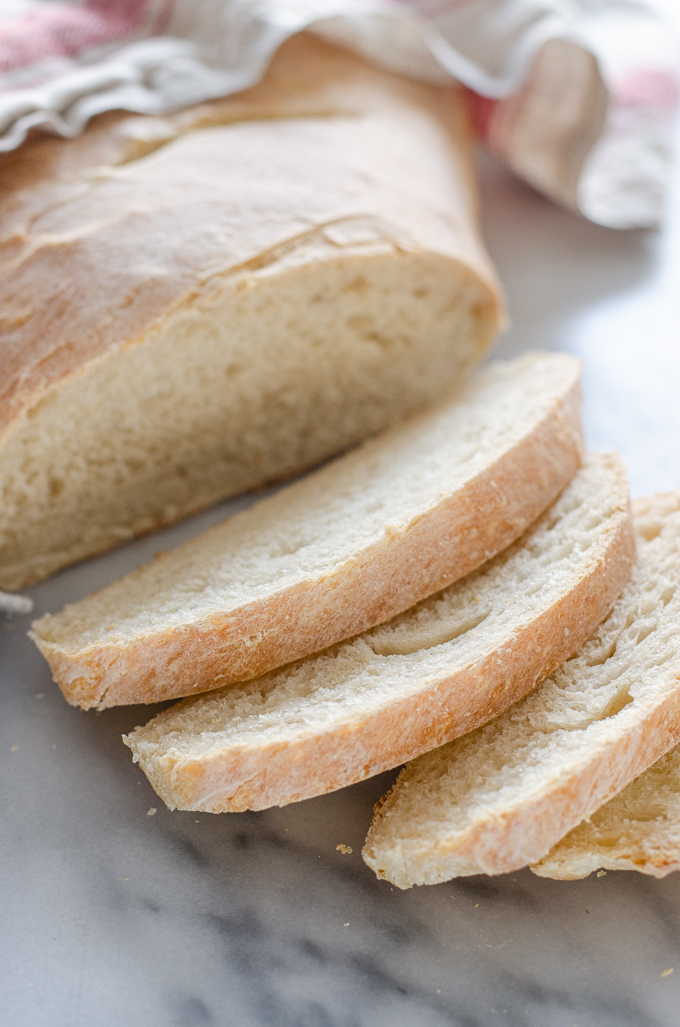
THEN it's safe to slice it up! I like to slice it on the bias...somehow it makes me feel fancy...?
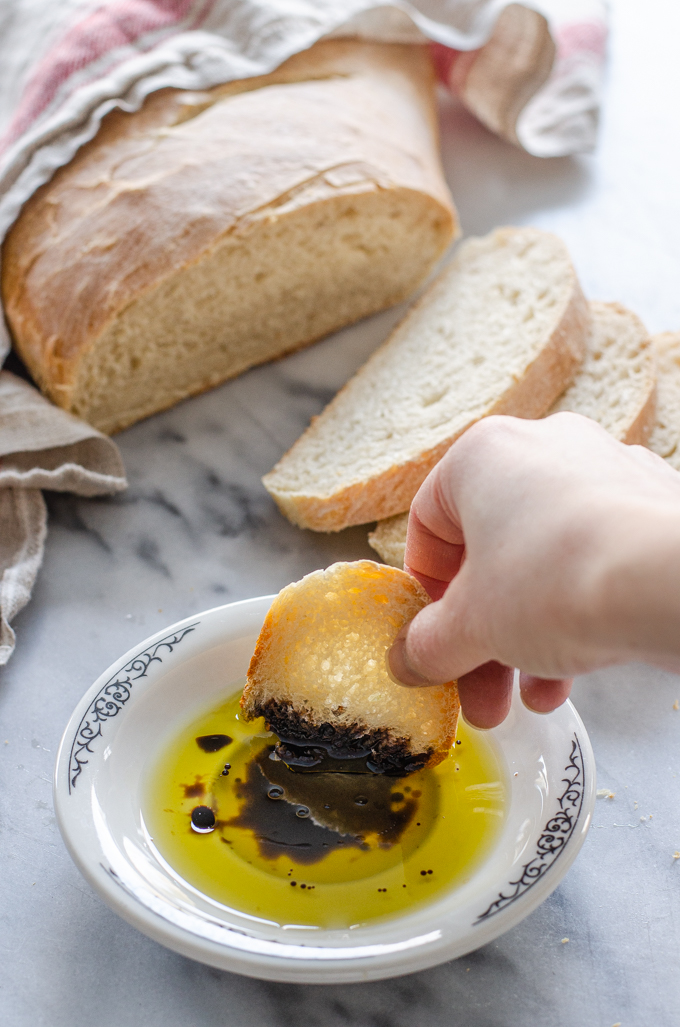

Now, besides using this soft sourdough French bread for a bruschetta potluck, it's also delicious dipped in olive oil and balsamic vinegar.
What's YOUR favorite way to eat French bread?
More Sourdough Recipes:
- Sourdough Pull Apart Rolls
- Sourdough Sandwich Bread
- How to Make Artisan Sourdough Bread
- Overnight Sourdough Waffles
- Sourdough Dutch Baby/German Pancake
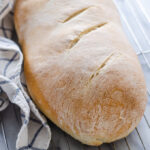
Soft Sourdough French Bread
This loaf of sourdough French bread has no yeast and is delightfully tangy.
Ingredients
- 1 cup water, 215 grams
- 1 cup active sourdough starter, 240 grams
- 3 ½ cups organic all-purpose flour, 470 grams
- 1 tablespoon raw honey
- 2 teaspoon unrefined sea salt, 11 grams
- 2 tablespoon olive oil, 18 grams
- extra olive oil, for work surface
Instructions
Mixing the Dough + First Rise
-
Place all of the dough ingredients in the bowl of a stand mixer. Briefly mix with a spatula or wooden spoon to form a shaggy dough. Attach to the base of the stand mixer and fit with the dough hook. Knead on medium-low speed for 15 minutes. The dough should be quite soft, but clean the sides of the bowl. You can add more flour if the dough seems very wet, but err on the side of wet rather than dry!
-
Transfer the dough to a well greased, large bowl, turning once to grease the top of the dough. Cover and allow to rise at room temperature until doubled, about 8-12 hours.
Forming the Loaf
-
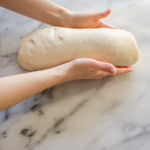
Grease your work surface. Plop the dough out onto it and gently pat it out to a rectangle. Grab the far edge of the dough and stretch it up and over to the middle of the dough. Use the side of your hand to press the edge of the fold in place. Repeat the stretching, folding, and pressing steps with the bottom edge, left edge, and right edge. Repeat once more with the top and bottom edges. Pinch the seam to seal well.
-
Flip the dough over and use your hands to push the edges of the dough under itself, creating even more surface tension. Pinch the ends of the loaf to seal.
Second Rise
-
Place the loaf on a parchment lined baking sheet. Cover with a tea towel and allow to rise in a warm spot until doubled. This can take anywhere from 4-8 hours, depending on how warm your kitchen is.
Baking the Loaf
-
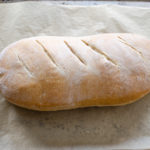
About half an hour before the loaf is done rising, preheat your oven to 450°F. Slash the loaf with a razor blade, lame, or serrated knife. Bake in preheated oven for 25-30 minutes, or until deep golden.
-
Transfer to a wire cooling rack. Allow to cool completely before slicing + enjoying!
Recipe Notes
Heavily adapted from Butter For All.



This was my first time making a sourdough loaf, and it turned out amazing! Thank you! It totally reminded me of the bread they serve when you sit down at an authentic Italian restaurant. I really appreciate the folding technique in pictures too! I also tried your sourdough pull apart rolls the other day and those were bomb!
Aw, so happy you enjoyed it, Melissa! And I'm glad that you found the step-by-step photos helpful. ❤❤
All the other sourdough recipes I've tried turned out dense and dry. This was AMAZING!! Light and soft it's now the only recipe I'll use! Thank you so much!
This makes me so happy! So glad you enjoyed it! ✨
This recipe is great. I’m getting ready to start my second batch this evening. Has anyone tried doubling the recipe?
I just doubled the recipe, added diastatic malt powder instead of honey, and a quarter cup milk to equal 2 cups liquid. Will let you know how it turn out tomorrow.
Yes, let us know how it turns out! I haven't worked with diastatic malt powder before!
I have tried this recipe twice and I cannot get it to work! My starter works well in other recipes, so it’s not that. I wonder if there is something missing with this ingredient s and of the baking temp might be too high..... idk... what a bummer.... just didn’t work!:(
Aw, sorry it didn't work out for you, Sarah! Have you used your starter for an exclusively sourdough risen bread, or only for things like pancakes and muffins that use baking soda to help raise it?
Here are some troubleshooting ideas...
*Is your starter kept at 100% hydration? I feed mine equal weights of flour and water.
*Does your starter pass the float test before you bake with it?
*Is your water less than 105 degrees F when you add it to bread dough?
Hope that helps!
I tried ~15-20 recipes before I arrived at this one and this gave me, by far, the best results. I doubled everything for two loafs and substituted wheat for 140 g of the total. The ease of this recipe compared to some others I've tried and better results... Sold.
I'm so glad you enjoyed it, Dean! Thank you for letting us know that it works to replace some of the flour with whole wheat flour!
I no longer have leftover starter! My family loves this bread and we are going through 3 loaves a week! I would love to split this recipe into two or three small loaves. Have you ever done this? If so any advice? Baking time?
I no longer have leftover starter! My family loves this bread and we are going through 3 loaves a week! I would love to split this recipe into two or three small loaves. Have you ever done this? If so any advice? Baking time?
This recipe looks perfect for a novice such as myself! However, I don't have a stand mixer. 🙁 Could I fold in the bowl, or work the dough on the counter instead? Thanks, I hope I can make this recipe work !
Hey Crystal,
Yes, you can knead this dough by hand on a counter. You may need to flour your work surface or grease it. Also, you'll want to increase the kneading time to 20 minutes. Hope that helps!
What about as far as stretch and folds, do you do that at all during the first rise?
Nope! The dough relies on the 15 minute knead to build strength.
Can I split in to two loaves for sandwiches?
I would say that if you want two loaves, you should double the recipe unless you're using smaller than usual loaf pans.
I was about to give up on making sourdough bread until I tried this recipe. This is the softest, best tasting sourdough I’ve ever made! My family says this recipes a keeper. Thank you so much! I can’t wait to try your sourdough waffles!
So happy you love it, Shelly! I think you'll really like the waffles. 🙂
Does the olive oil go in the bread dough mixture, or is it just for the bowl greasing and counter greasing?
Thanks! Kathleen
Hey Kathleen,
The 2 tablespoons of olive oil go into the dough. I'll update the recipe to reflect that extra olive oil is needed for the work surface!
Thanks Erica! Making this again tonight. It's a hit at our house.
So glad you guys are enjoying it, Kathleen!
Thank you I was wondering the same thing.
So excited about this and want to try tomorrow. Is this 100% hydration starter ?
Yes! I use a 100% hydration starter the majority of the time. Hope you enjoy! ✨
Hi Erica
It was nice reading your recipe.
I am first time baker with sourdough starter .
i made my sour dough by maturing it for 5 days .
i have 130 ml of sourdough starter, could you please let me know how much All purpose flour i can add to it.
Hi Padmini,
Congratulations on getting into sourdough!
Could you let me know the weight of your starter? I feed my starter by weights, not volumes.
Awesone bread. It was light and tender. The directions were easy to follow. Just started my second loaf tonight. Fisrt loaf just made it a day and a half, then it was completely gone.
Super yummo.
So happy you've been enjoying it, Paulina! ✨❤
My dough didn’t hold shape at all. I barely got it onto the sheet pan and once there, it turned into a puddle. ?
Hey Ashely,
Sorry it didn't hold shape for you! Here are some troubleshooting suggestions:
*Perhaps you needed more flour in the dough? Sometimes different climates, times of the year, or humidity levels require different amounts of flour. Did your initial dough look like mine in the photos, or was it more slack?
*Maybe the gluten wasn't developed enough. Did the dough feel nice and stretchy after kneading it?
*Was the dough over-proofed? The good "bugs" in sourdough can eat up a lot of the gluten or make the dough more slack if its left too long.
Hope that helps!
My dough did not hold the shape well for me either. I am going to give it another try and slowly add the water. This time, I used 3/4 c water plus 1/2 tbsp. Hopefully it works.
Will it be ok to let the first poof go for more than 12 hours? By my calculations it will be more like 14 hours unless I get up at 3 in the morning to shape it.
Hi Beatriz,
Sourdough is usually pretty forgiving on the first rise unless your house is very warm. You do run the danger of over proofing the dough and having it get too slack. If your house isn't super warm, and extra 2 hours should be okay. Or you can let the dough rise for 2 hours at room temperature, than let it finish its bulk rise in the fridge (usually about 12-22 hours).
Can you please tell how much of water quantity should I use for a complete whole wheat flour like Atta? I know hydration % differs from AP Flour to WWF. But for soft bread what should be the hydration level when we use Whole Wheat Flour / Atta ?Also if it is Durum Atta how much should be the hydration %?
Here in UK we call it a Bloomer, I now only use your recipe for perfect results every time.
Great sandwich bread, stays fresh for days, although it doesn't get to hang around as it just hungerly gets munched by this household within hours of being out the oven.
Thank you for sharing, great stuff.
So happy you've been enjoying it! I find that sourdough bread tends to keep longer. I don't think I've heard the term bloomer before. 🙂
WIll it be okay to substitute some if not all of the all purpose flour with bread flour?
I actually think that would be ideal. You'll want to start with a smaller amount of flour, and add more to achieve the texture demonstrated in the photos.